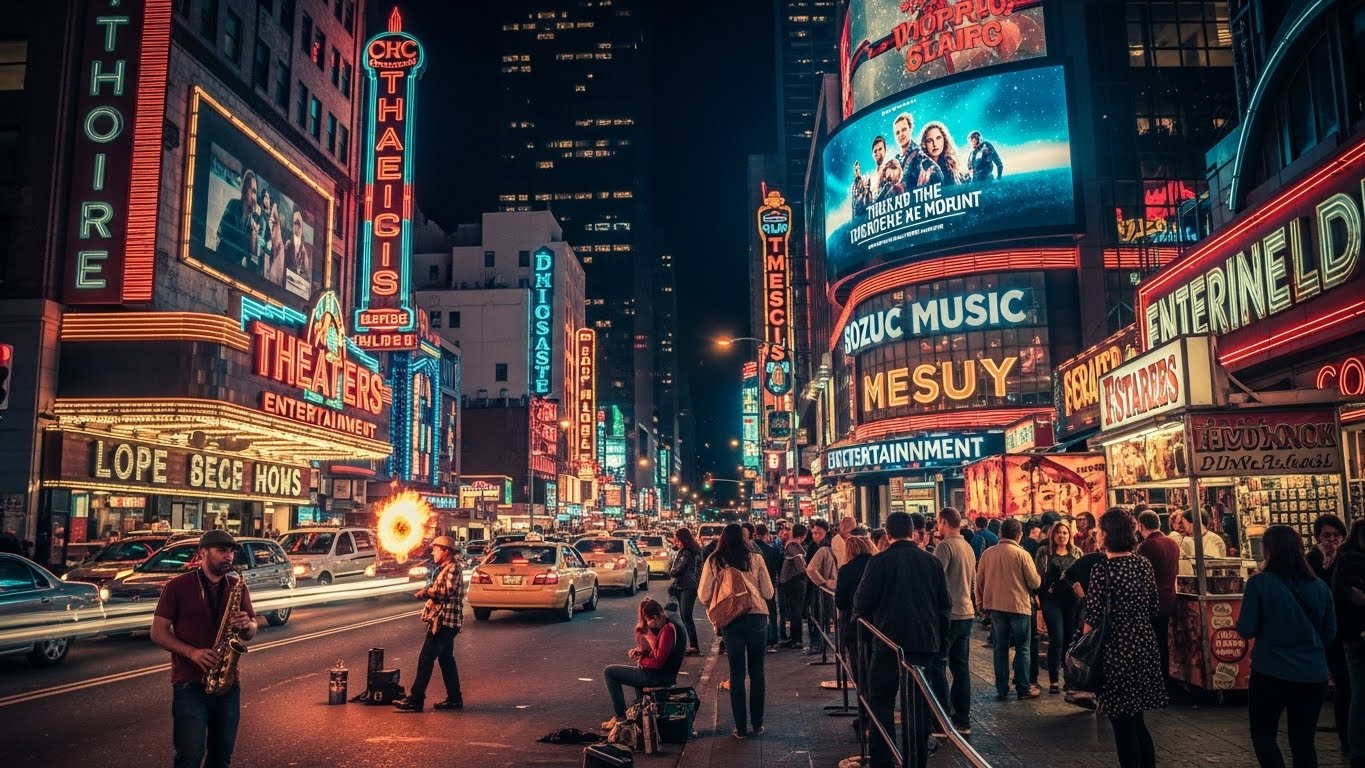

Entertainment has always been an integral part of human society, providing not just a means of escaping the everyday grind, but also a channel for storytelling, expression, and shared experiences. Over the years, the ways in which we consume entertainment have evolved, shifting from the communal storytelling traditions of ancient cultures to the massive digital platforms that dominate today’s media landscape. This blog will explore how technology has revolutionized the entertainment industry, how these changes have affected audiences, and what the future holds for entertainment in a world increasingly driven by digital innovation.
The Evolution of Entertainment: A Historical Perspective
To understand the impact of modern technology on entertainment, it’s important to look back at how entertainment has evolved. The earliest forms of entertainment were rooted in live performances, whether through music, theater, or storytelling. In ancient Greece, for instance, theater became a key aspect of cultural life, with plays being performed in grand amphitheaters as a way to educate and entertain citizens. Similarly, in early societies, music and dance were integral to rituals, festivals, and communal gatherings, serving as a way to bond with others and express cultural identity.
With the advent of print media in the 15th century, entertainment began to shift once again. Books, magazines, and newspapers allowed for stories to be disseminated to a broader audience, making entertainment more accessible. Fast forward to the 19th century, and the introduction of film and photography brought a new dimension to entertainment, giving rise to the silver screen. This marked the beginning of the modern entertainment era, where mass media could reach millions of people.
The Impact of Television and Radio on Mass Entertainment
The 20th century ushered in the age of radio and television, two technologies that profoundly changed the way entertainment was consumed. With radio, families could listen to dramas, comedies, and news broadcasts, creating a shared experience even for those in remote areas. In the 1930s and 1940s, shows like The Shadow and The Lone Ranger became household names, with listeners eagerly tuning in each week for the latest episode. Radio not only served as a source of entertainment, but it also became a powerful tool for communication, especially during times of war, when it played a crucial role in keeping people informed.
Television took this a step further by adding a visual element to the mix. The 1950s and 1960s saw the rise of TV as the primary form of entertainment in the household, with shows like I Love Lucy and The Twilight Zone becoming iconic and shaping popular culture. Television provided an escape into other worlds, from sitcoms to dramas, and became a space for storytelling, education, and social commentary. As color TVs and cable channels emerged, the entertainment options expanded exponentially, giving rise to niche markets and a more fragmented media landscape.
The Digital Age: The Shift to Streaming and On-Demand Entertainment
The most significant shift in the entertainment industry came with the rise of the internet and digital technology. In the late 20th and early 21st centuries, the development of the World Wide Web revolutionized how content was consumed. No longer were people restricted to broadcast schedules or physical formats like VHS and DVD. Instead, the internet allowed people to access entertainment on-demand, giving rise to a new era of digital content.
Streaming platforms like Netflix, Hulu, and Amazon Prime Video led the way in this transformation. Netflix, originally a DVD rental service, pivoted to streaming in 2007, revolutionizing the way people watch TV and movies. By offering entire seasons of shows and movies that could be streamed at any time, Netflix and its competitors changed the entertainment landscape forever. Binge-watching became a cultural phenomenon, and traditional TV networks found themselves scrambling to adapt to this new form of on-demand content consumption.
In addition to video streaming, the music industry experienced a similar transformation with platforms like Spotify and Apple Music. No longer did people have to buy individual albums or CDs. Instead, they could access millions of songs from all genres with the click of a button. The shift from physical media to digital streaming has not only reshaped how people consume music, but it has also fundamentally altered how artists release and distribute their work. Artists are no longer reliant on record labels for distribution; they can directly reach audiences through platforms like SoundCloud and YouTube, democratizing the music industry in a way that was previously unimaginable.
Social Media: The New Frontier of Entertainment
Another major transformation in the entertainment industry has been the rise of social media. Platforms like YouTube, Instagram, TikTok, and Twitter have given rise to a new generation of content creators and influencers who are reshaping the definition of entertainment. These platforms have blurred the line between traditional entertainment and user-generated content, enabling anyone with a smartphone to create and share content with a global audience.
YouTube, for example, has turned ordinary people into celebrities. Creators like PewDiePie, Casey Neistat, and Lilly Singh have built massive followings by producing original content on YouTube. From vlogs and tutorials to comedy skits and web series, YouTube has democratized entertainment, allowing anyone with talent and determination to become a star.
TikTok has taken this a step further by offering a platform for short-form content that can go viral in a matter of hours. This quick consumption of content has given rise to a new form of entertainment where creativity is rewarded, and the potential for virality is immense. Whether it’s a dance challenge, a comedy sketch, or a lip-sync video, TikTok has become a major player in the entertainment industry, particularly among younger audiences.
Gaming: The Intersection of Entertainment and Technology
In addition to video streaming and social media, gaming has emerged as one of the most influential forms of entertainment in the 21st century. With the rise of powerful gaming consoles like the PlayStation, Xbox, and Nintendo Switch, as well as the ubiquity of gaming PCs, video games have become a multi-billion dollar industry.
Video games are no longer just a form of leisure; they have become an integral part of the social fabric. Online multiplayer games like Fortnite, League of Legends, and Minecraft have turned gaming into a social experience, with millions of players around the world connecting in virtual environments. The rise of esports has further solidified gaming’s status as a legitimate form of entertainment, with professional tournaments and live-streamed events attracting massive audiences. Games are no longer just about entertainment; they are a cultural phenomenon that brings people together, provides opportunities for professional careers, and even contributes to the development of new technologies.
Moreover, gaming is increasingly intersecting with other forms of entertainment. Virtual reality (VR) and augmented reality (AR) are expanding the possibilities of gaming, offering immersive experiences that go beyond traditional gameplay. With VR headsets like Oculus Rift and HTC Vive, players can step into fully realized virtual worlds, adding an entirely new dimension to the gaming experience.
The Future of Entertainment: Personalization, Immersion, and Interactivity
Looking forward, the future of entertainment is undoubtedly intertwined with technological innovation. The continued development of artificial intelligence (AI), virtual reality (VR), augmented reality (AR), and 5G networks will likely result in even more immersive and interactive forms of entertainment. For instance, AI can be used to personalize content recommendations, ensuring that users receive tailored suggestions based on their viewing habits and preferences.
Virtual reality and augmented reality are expected to play a major role in the future of entertainment, particularly in gaming and live events. Imagine attending a concert in a virtual arena, interacting with other fans and the performers in real-time, or watching a live sports game from the comfort of your own home as if you were actually there. The possibilities for creating more immersive and engaging experiences are endless, and as technology advances, these innovations will become more accessible to the masses.
Moreover, the continued evolution of streaming platforms will likely lead to even more on-demand content, with an emphasis on personalized experiences. The rise of interactive content—where viewers can make choices that affect the outcome of a story, like in Bandersnatch, a Netflix film from the Black Mirror series—suggests that entertainment will become even more participatory. Viewers may no longer be passive recipients of content; instead, they could have an active role in shaping narratives.
Conclusion: The Endless Possibilities of Digital Entertainment
As technology continues to evolve, the entertainment industry is undergoing a transformation that promises to provide even more diverse, personalized, and immersive experiences. From the rise of streaming platforms and social media to the convergence of gaming, virtual reality, and artificial intelligence, the future of entertainment is boundless. It is clear that technology will continue to play a crucial role in how we consume and interact with entertainment in the years to come.
In the future, entertainment will not just be something we watch or listen to—it will be something we experience in ways that blur the lines between the digital and physical worlds. Whether through personalized content, interactive storytelling, or immersive virtual environments, entertainment is becoming more engaging and accessible than ever before. As technology continues to advance, we can only imagine what new forms of entertainment will emerge, offering endless possibilities for fun, connection, and creativity.