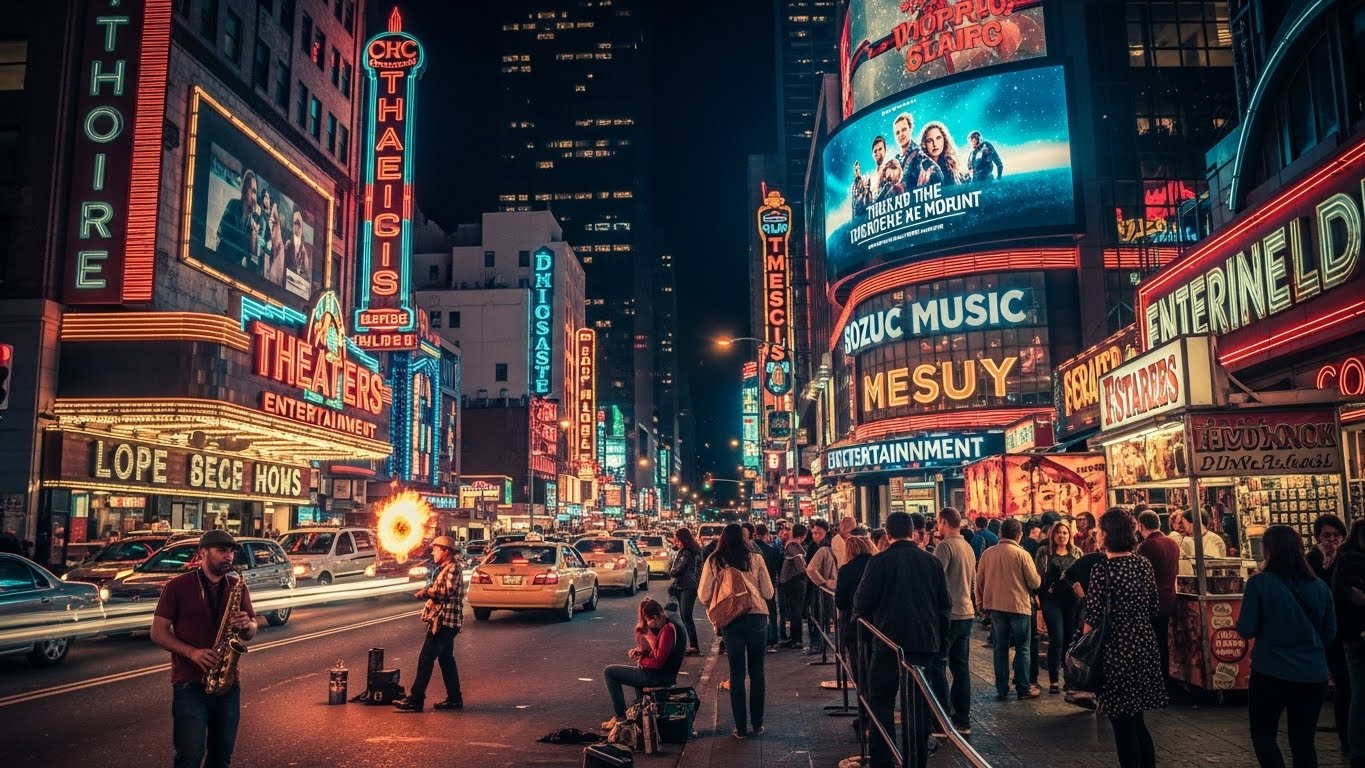

Entertainment has always been a vital part of human culture, evolving alongside technology, societal changes, and global trends. What began as simple storytelling around a campfire has transformed into a vast digital universe of endless options. In this blog, we will explore how entertainment has evolved over time, and how technology continues to reshape the ways we experience joy and escape.
The Golden Age of Traditional Entertainment
Historically, entertainment was a community-based activity. Before the advent of television and cinema, people gathered in homes or public spaces to engage in shared experiences like theater, music performances, storytelling, and even sporting events. Radio played a pivotal role in shaping early entertainment by bringing live performances, comedy shows, and music right into people’s homes.
In the mid-20th century, cinema emerged as the leading form of entertainment. Hollywood’s “Golden Age” saw the rise of iconic films and legendary actors, while television took hold in the homes of millions. The rise of mass media allowed for cultural phenomena to spread quickly, with shows like I Love Lucy or The Ed Sullivan Show becoming must-watch events. These early forms of entertainment not only provided joy but also reflected the cultural and social norms of the time.
The Digital Shift: Birth of the Internet and Streaming Services
The late 20th and early 21st centuries saw the arrival of the internet, forever altering the entertainment landscape. With the rise of websites, online streaming, and digital content platforms, audiences were no longer limited by geographical boundaries or scheduled programming. They could now access films, TV shows, music, and games whenever and wherever they wanted.
The most significant development in this era was the rise of streaming services such as Netflix, Hulu, and YouTube. These platforms offered on-demand content, revolutionizing how audiences consumed media. Gone were the days of appointment television; instead, viewers could binge-watch entire seasons of a show in one sitting, enjoy a documentary, or listen to their favorite podcast—all with a simple click or tap.
This shift not only democratized access to entertainment but also gave rise to new genres, like viral videos, podcasts, and web series. Creators and content producers now had the freedom to reach a global audience without the need for traditional distribution channels. This opened the door for niche content, catering to diverse tastes, interests, and cultures.
The Rise of Interactive and Immersive Entertainment
As technology continues to advance, the entertainment world has embraced interactivity and immersion. Video games, once seen as a form of children’s entertainment, have evolved into a multi-billion-dollar industry enjoyed by people of all ages. Games today offer complex storylines, rich graphics, and multiplayer experiences that blur the lines between gaming and traditional storytelling.
Virtual reality (VR) and augmented reality (AR) are also pushing the boundaries of what entertainment can be. VR headsets allow users to step into entirely different worlds, whether it’s playing an action-packed game or exploring a virtual museum. Similarly, AR apps like Pokémon GO provide interactive experiences that integrate the real world with digital elements. These technologies have opened up new avenues for storytelling, education, and social interaction.
Live-streaming platforms such as Twitch and TikTok have also changed the way we interact with entertainment. Users can now engage with their favorite streamers and influencers in real-time, sharing experiences and reactions. The rise of user-generated content has empowered individuals to create and share their own entertainment with the world, transforming passive consumers into active participants.
The Future of Entertainment: AI, Personalization, and Beyond
Looking forward, the future of entertainment promises even more groundbreaking innovations. Artificial intelligence (AI) is already playing a role in personalizing content recommendations. Streaming platforms like Netflix and Spotify use algorithms to suggest movies, shows, or music based on a user’s preferences. However, AI’s potential goes far beyond recommendations. We are beginning to see AI-generated music, deepfake videos, and interactive storytelling, where machines assist in crafting narratives.
Another exciting development is the growth of immersive experiences. While VR and AR are still in their infancy, their potential for creating fully immersive worlds is vast. Imagine watching a movie where you are not just a spectator, but an active participant, influencing the storyline as it unfolds around you. Similarly, AI-driven video games may create worlds that evolve and adapt to your decisions in real-time, creating a truly personalized experience.
The role of social media and community-driven entertainment is also expected to grow. Platforms are increasingly integrating features that allow users to create and share their own content, leading to the rise of citizen creators. This shift is breaking down the traditional barriers between producer and consumer, and it seems likely that the future of entertainment will be more collaborative, diverse, and decentralized than ever before.
The Enduring Power of Entertainment: A Constant in an Ever-Changing World
Despite the rapid pace of change in the entertainment industry, one thing remains constant: the human need for connection, joy, and escape. From ancient cave paintings to today’s cutting-edge digital experiences, entertainment has always been a means for us to share stories, celebrate culture, and explore new worlds. While technology has certainly changed the how and where of entertainment, it will never change the deep-seated desire for us to be entertained.
As we look to the future, it’s clear that entertainment will continue to evolve in exciting and unexpected ways. Whether through virtual worlds, AI-generated art, or new forms of interactive media, the possibilities are endless. But one thing is certain: no matter how entertainment evolves, it will remain an essential part of our lives, enriching our experiences and uniting us across time and space.